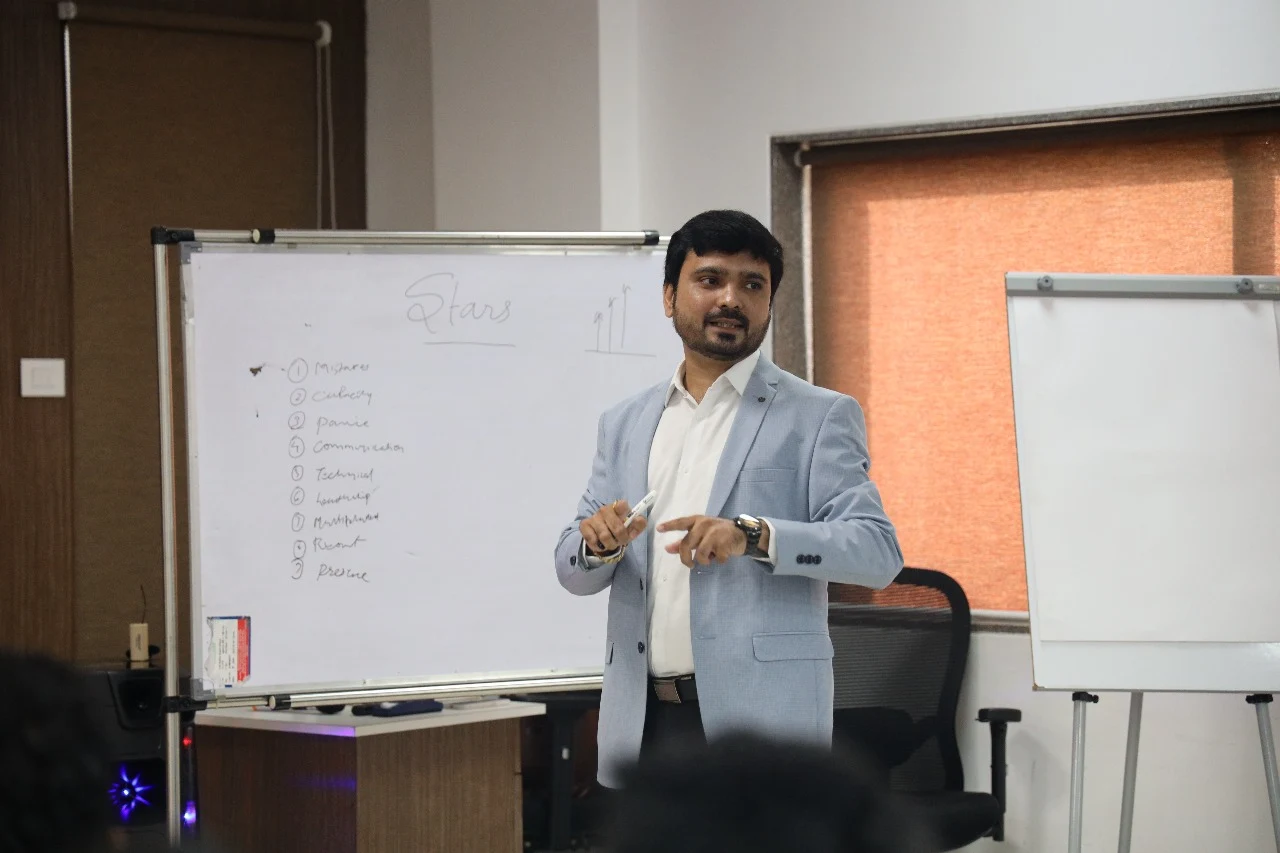
Every year, Indian corporations collectively spend thousands of crores on leadership training. The format is predictable: a two-day offsite at a resort, a motivational speaker, some PowerPoint slides about "transformational leadership" and "emotional intelligence," a group photo, and then everyone goes back to work. By Friday, it's forgotten. By the next quarter, the same leadership problems persist.
If this sounds like your company's approach to leadership development, you're not just wasting money — you're actively creating cynicism. Your employees have been through enough "trainings" to know the pattern: big promises, zero follow-through, nothing changes.
But here's the thing — leadership development isn't the problem. The way most Indian companies approach it is the problem. When done right, leadership training is the single highest-ROI investment a company can make. The difference between programmes that transform and programmes that waste time comes down to five critical mistakes — and their solutions.
Mistake #1: Training Is Treated as an Event, Not a Process
The biggest mistake in Indian corporate training is the belief that leadership can be developed in a workshop. You wouldn't expect someone to become a skilled cricketer after two days of coaching. Yet we expect managers to become effective leaders after a two-day programme.
Research from the Centre for Creative Leadership shows that only 10% of leadership development happens in formal training. The remaining 90% happens through on-the-job experiences (70%) and coaching/mentoring relationships (20%). This is the well-known 70-20-10 model — and most Indian companies invest almost exclusively in the 10%.
What this means practically: if your leadership development doesn't include structured on-the-job application, coaching support, and follow-up reinforcement, you're investing in the smallest slice of the pie and ignoring the rest.
The Fix
Design leadership programmes as 3-6 month journeys, not 2-day events. Each module should include:
- A learning session (the 10%)
- Specific on-the-job application challenges (the 70%)
- Peer learning circles and coaching conversations (the 20%)
- Follow-up sessions to share experiences and reinforce learning
Mistake #2: Generic Content That Doesn't Match Real Challenges
Here's a test: can your leadership training facilitator describe the specific challenges your managers face? Not generic leadership challenges — your challenges. The dynamics between your sales team and operations. The cultural nuances in your Tier-2 city factory. The tension between your founding team and professional managers. The challenge of leading a team where half the members are twice your age.
Most leadership trainers deliver the same programme to every company. They'll talk about leadership styles, maybe do a DISC assessment, share some Harvard Business Review case studies, and call it a day. It's polished. It's professional. And it's almost completely disconnected from what your managers actually deal with on Monday morning.
The Fix
Every leadership programme should start with a diagnosis:
- What are the specific leadership gaps? Not theoretical gaps — actual gaps observed in how your managers lead, communicate, make decisions, and handle conflict.
- What does "good leadership" look like in YOUR context? Leadership in a fast-growing startup looks different from leadership in a family-owned manufacturing business. The programme should reflect your reality.
- What are the real scenarios your managers face? Use these as case studies instead of generic ones. When a manager practises handling a situation they'll actually encounter, the learning sticks.
Mistake #3: Training the Wrong People
Many Indian companies focus leadership development on senior executives — the CXO team, the VP layer. While senior leadership development matters, the biggest leadership gap in most Indian organisations is at the middle management level.
These are your team leads, department managers, project managers, and shift supervisors. They were promoted because they were great individual contributors — skilled engineers, top salespeople, experienced operators. But nobody taught them how to lead a team. They're managing with instinct, not skill. And they're responsible for the day-to-day experience of 80% of your workforce.
When your first-line managers can't conduct an effective 1-on-1, can't give constructive feedback, can't manage conflict in their team, or can't motivate people through a tough quarter — it doesn't matter how visionary your CEO is. The employee experience is shaped by the direct manager, not the corner office.
The Fix
Prioritise leadership development for first-line and middle managers. Focus on practical skills:
- How to have effective 1-on-1 conversations
- How to give feedback that improves performance (not just annual review form-filling)
- How to delegate effectively (a massive challenge in Indian management culture where "if you want it done right, do it yourself" is the default)
- How to manage conflict without escalating to senior leadership
- How to coach team members instead of just directing them
- How to manage up — communicating effectively with their own managers
Mistake #4: No Measurement of Impact
Ask most Indian companies what ROI they got from their leadership training, and you'll get a blank stare. Or they'll show you the feedback forms — "4.5 out of 5 rating!" — as if participant satisfaction equals business impact.
A training programme that makes people feel good but doesn't change behaviour is entertainment, not development.
The Kirkpatrick Model outlines four levels of training evaluation:
- Reaction — Did they like it? (This is what most companies measure)
- Learning — Did they learn something new?
- Behaviour — Did their behaviour change on the job?
- Results — Did it impact business outcomes?
Most Indian companies stop at Level 1. Some reach Level 2. Almost none measure Level 3 or 4. Which means there's no evidence that the training worked, no accountability for behaviour change, and no justification for continued investment.
The Fix
Build measurement into the programme design from the start:
- Pre-programme assessment: 360-degree feedback or manager capability assessment to establish a baseline
- Behaviour indicators: Define 3-5 specific observable behaviours that should change as a result of the programme
- Post-programme assessment: Same 360-degree feedback or assessment after 3 months to measure change
- Business metrics: Track team engagement scores, attrition rates, and productivity metrics for trained managers vs. untrained ones
Mistake #5: No Support System After the Training
Even when the training is excellent, the real test is what happens when the manager goes back to their desk. They're motivated, they have new ideas, they want to lead differently. But then the system pushes back — their own boss still leads the old way, the culture doesn't support experimentation, there's no one to turn to when they struggle to apply what they learned.
Without a support system, even the best training fades within 30 days. Psychologists call this the "forgetting curve" — without reinforcement, people forget 70% of what they learned within a week.
The Fix
- Coaching support: Pair trained managers with a coach (internal or external) for 3-6 months post-training
- Peer learning groups: Create small groups of trained managers who meet monthly to share challenges and solutions
- Manager's manager involvement: Brief senior leaders on what their direct reports learned and how to support them in applying it
- Refresher sessions: Quarterly half-day sessions to revisit key concepts and share success stories
What Results-Driven Leadership Development Looks Like
At The Future Corporate, we design leadership programmes that are:
- Customised to your context — we spend time understanding your business, culture, and specific leadership challenges before designing anything
- Behaviour-focused — every module targets specific observable behaviours, not just knowledge
- Extended over time — typically 3-6 month journeys with learning, application, and coaching phases
- Measured for impact — pre and post assessments, behaviour tracking, and business metric correlation
- Supported by systems — we help you build the structures (1-on-1 frameworks, feedback tools, performance systems) that sustain the behavioural change
The Business Case for Getting This Right
Companies that invest in effective leadership development see:
- 25-30% reduction in team attrition under trained managers
- 20-40% improvement in team productivity (measured through output metrics)
- Significant improvement in employee engagement scores
- Faster execution of strategic initiatives due to better-aligned middle management
- Stronger talent pipeline — you're growing leaders internally instead of always hiring from outside
For a company spending ₹1 crore annually on attrition-related costs, even a 25% improvement pays for the entire leadership programme several times over.
Leadership training doesn't fail because the concept is wrong. It fails because the execution is lazy. If you're ready to move beyond motivational workshops and invest in leadership development that actually changes how your managers lead — The Future Corporate can help you design and deliver that journey.